← Velometeo
What to Wear
What to Wear
Cycling at 10°C
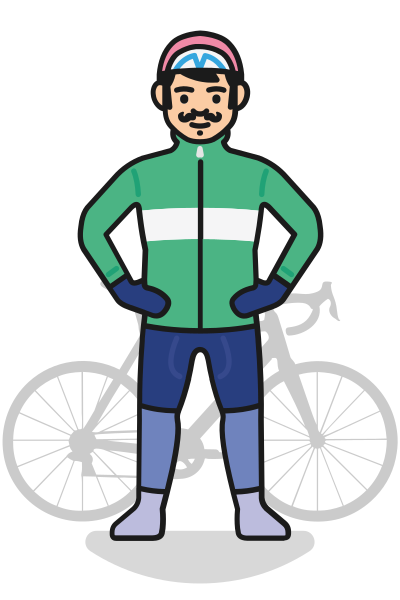
Ten degrees is the trickiest temperature in cycling. Cold enough to need thermal layers at the start, warm enough to overheat in full winter kit by the first climb. Here's how to get it right.
| Item | Status | Notes |
|---|---|---|
| Bib tights | Essential | Thermal or standard, depending on how cold you run. Fleece-lined for riders who feel the cold easily. |
| Long sleeve thermal jersey | Essential | The primary insulating layer. A windproof front panel makes a significant difference. |
| Thermal base layer | Essential | Short or long sleeve under the jersey. Merino or synthetic — not cotton. |
| Light gloves | Essential | Thin, wind-resistant gloves. Full winter gloves are too warm for 10°C unless it is very windy. |
| Windproof gilet | Optional | Excellent addition for descents and headwind sections. Easy to stow in a back pocket. |
| Knee warmers | Optional | Better than full tights if you run warm — gives leg coverage without full thermal insulation. |
| Overshoes | Optional | Useful on very windy days or longer rides. Less critical than at 5°C but appreciated after an hour. |
| Arm warmers | Skip | Not enough at 10°C on their own. Use a full long sleeve jersey instead. |
| Bib shorts | Skip | Too cold for most riders. Save these for 14°C and above. |
💡 Pro tip: At 10°C, start slightly underdressed rather than overdressed. You will warm up within 10–15 minutes of riding. If you are comfortable at a standstill, you will be sweating by the first climb.
Jacket or Jersey Plus Gilet?
Ten degrees is the classic crossover point for this question. A thermal jacket with a windproof front is the simpler, warmer choice — ideal for steady-pace rides, commutes, or days with a strong headwind. A long sleeve jersey plus a gilet offers more flexibility: you can remove the gilet mid-ride and stow it easily if the temperature rises.
The jersey-and-gilet combination suits riders who generate a lot of heat on climbs. The jacket is better for flat routes, frequent stops, or riding into a sustained headwind where you cannot unzip to manage heat.
Wind Changes Everything
A 20 km/h headwind at 10°C feels significantly colder than still air at the same temperature — effective wind chill can push the perceived temperature down by 4–6°C. Check the forecast before heading out and factor wind direction into your outer layer choice.
If you are riding into a headwind on the outward leg, you will have a tailwind on the return — which means you will warm up significantly on the way back. Plan accordingly: a gilet you can remove is often more useful than a jacket you cannot.
⚠️ Watch for temperature swings: Spring and autumn mornings at 10°C can climb to 18°C by afternoon. For long rides, build in layering options — arm warmers, a packable gilet, or knee warmers that come off easily mid-ride.
How Ride Length Changes the Equation
For rides under 90 minutes the kit list above is well matched to conditions. For anything over two hours, add one extra layer for your core. Your power output drops in the second half of a long ride, heat production decreases, and you cool faster than you expect — particularly on long descents or into an evening headwind.
A packable gilet weighs almost nothing and can make a real difference on a long return leg. It is the single most useful extra item to carry at this temperature.