← Velometeo
What to Wear
What to Wear
Cycling at 15°C
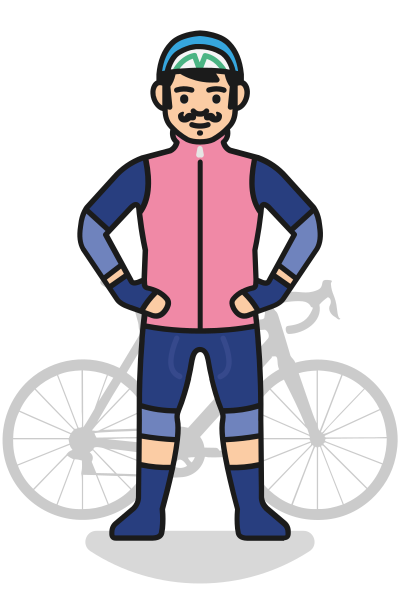
Fifteen degrees is arguably the best cycling temperature — and one of the easiest to get wrong. Too much clothing and you will be soaked in sweat before the first hour is done. Too little and the first long descent will leave you shivering.
| Item | Status | Notes |
|---|---|---|
| Bib shorts | Essential | Standard bib shorts. No need for thermal versions at this temperature unless you run very cold. |
| Short sleeve jersey | Essential | Lightweight, breathable. A mid-weight jersey is ideal — not your summer race jersey. |
| Lightweight base layer | Essential | A thin mesh or short-sleeve base layer. Moves sweat away and adds a surprising amount of warmth. |
| Arm warmers | Optional | Carry in your back pocket for the first 20 minutes and for descents. Remove when you warm up. |
| Lightweight gilet | Optional | Worthwhile for early morning starts, long descents, or exposed routes with a headwind. |
| Knee warmers | Optional | Some riders prefer these in the 13–16°C range. A personal preference rather than a necessity. |
| Light gloves | Optional | Only for cold early mornings or exposed, windy routes. Usually off within the first 30 minutes. |
| Bib tights | Skip | Too warm at 15°C for most riders. You will overheat on any climb. |
| Winter jacket | Skip | Far too warm. A light gilet is all the wind protection you need. |
💡 Pro tip: Arm warmers are the single best investment for 15°C riding. They weigh almost nothing, pack into a jersey pocket, and solve the classic problem of being cold at the start and warm by the second hour. Always carry a pair.
The Arm Warmer System
At 15°C, arm warmers are the most versatile piece of kit you can carry. Start with them on — your arms and hands will feel the cold on the first section before your core temperature rises. Once you are 20–30 minutes into the ride and generating heat, roll them down or remove them and stuff them into a back pocket.
The key is to act early: remove arm warmers before you start sweating, not after. Damp arm warmers against warm skin cool you down quickly on a descent, which defeats the purpose.
When to Add a Gilet
A lightweight gilet earns its place at 15°C under a few specific conditions: early morning starts when the temperature is at the lower end, routes with long exposed descents, or any ride that takes you into a sustained headwind for more than 20 minutes.
A gilet at 15°C should be packable — something you can fold into a jersey pocket within 30 seconds. If it is too bulky to stow easily, it will stay on all day and you will overheat. The lightest wind gilets weigh under 100g and make an enormous difference to perceived temperature at speed.
⚠️ Descents change the temperature equation: On a fast descent at 15°C, wind chill can push perceived temperature down to near 8°C. If your route includes long descents — particularly in the mountains — carry arm warmers and a gilet even if the forecast temperature seems warm enough to go without.
Morning Versus Afternoon Riding
A 15°C forecast can mean very different things depending on the time of day. A 15°C morning in spring is often rising toward 20°C by midday — start dressed for 12°C and you will be comfortable all day. A 15°C afternoon in autumn is often falling toward 10°C by the time you return — start dressed for 15°C and add a layer for the last hour.
Check when in the day the forecast shows 15°C, not just the headline temperature. The direction of travel matters as much as the number.