← Velometeo
What to Wear
What to Wear
Cycling at 5°C
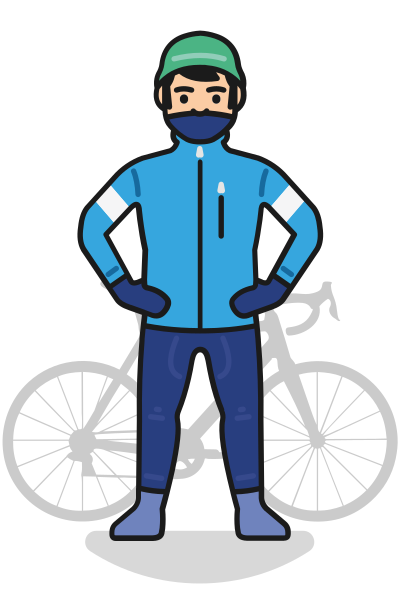
Five degrees is where cyclists start to struggle. It's cold enough to numb fingers and toes within minutes, but many riders still underdress because they know they'll warm up. Here's exactly what to wear — and what to skip.
| Item | Status | Notes |
|---|---|---|
| Thermal bib tights | Essential | Full-length, fleece-lined. Do not substitute with leg warmers at this temperature. |
| Thermal base layer (long sleeve) | Essential | Merino or synthetic. This is the most important layer — traps heat without bulk. |
| Winter jacket (windproof) | Essential | A proper winter jacket with windproof front panel. Thermal jersey works if you add a gilet. |
| Full-finger gloves | Essential | Winter gloves, not the thin ones. Cold hands make riding miserable and dangerous. |
| Overshoes or toe covers | Essential | Feet go numb fast. Neoprene overshoes are best; toe covers work for shorter rides. |
| Neck gaiter or buff | Optional | Valuable on longer rides. Can be pulled up as a face covering into headwind. |
| Gilet (vest) | Optional | Packable windproof layer for extra core warmth. Useful if wearing jersey instead of jacket. |
| Arm warmers | Skip | Not enough at 5°C. You need a full thermal jersey. |
| Bib shorts | Skip | Way too cold. Thermal tights only. |
💡 Pro tip: The biggest mistake at 5°C is wearing a summer base layer under a winter jersey. A proper thermal base layer does more work than any outer layer — don't skip it.
Protecting Your Extremities
At 5°C, extremity protection matters more than anything else. Your core will stay warm as long as you're pedaling, but fingers, toes, and ears don't generate heat the same way.
Hands: You need gloves rated for cold weather — look for insulation and a wind-resistant outer layer. Lobster-claw gloves (two fingers together) offer a good balance of warmth and dexterity. Full mittens are warmer but make gear changes awkward.
Feet: Road cycling shoes are not designed for cold weather. The mesh or carbon sole conducts cold directly to your foot. Neoprene overshoes are the most effective solution. Wool socks help, but they don't replace overshoes.
Ears: A thin thermal cap under your helmet, or a headband that covers your ears, prevents the sharp pain of cold air on your ears at speed.
How Long Is Your Ride?
For rides under an hour, you can get away with slightly less kit — your core temperature will stay elevated throughout. For anything over 90 minutes, dress as if it's 2–3°C colder than the forecast, because you'll slow down on the second half and cool quickly.
⚠️ Watch for wind chill: At 5°C with a 20 mph headwind, the effective temperature on your skin drops to around -2°C. Always check wind speed before you head out — it changes what you need to wear more than temperature alone.
The Layering Principle
At 5°C, cycling clothing works in three layers: a moisture-wicking base to move sweat away from your skin, an insulating mid layer to trap warmth, and a wind-blocking outer layer to stop cold air cutting through. Most quality thermal jerseys combine the mid and outer layer in one garment.
Avoid cotton at any layer. It absorbs moisture and holds it against your skin, which will make you feel colder than the air temperature within minutes of working hard.