← Velometeo
Winter Cycling:
Winter Cycling:
Complete Kit Guide
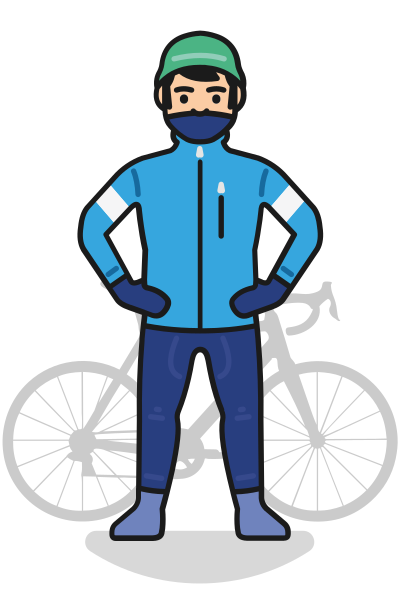
Winter cycling gets a bad reputation. Most of it is undeserved — the right gear makes cold-weather riding genuinely comfortable and rewarding. The problem is not the weather; it is usually wearing the wrong kit or the right kit in the wrong combination.
| Item | Status | Notes |
|---|---|---|
| Thermal bib tights | Essential | Fleece-lined for sub-8°C. Full-length, with a bib to prevent the jersey riding up. Do not use leg warmers as a substitute below 8°C. |
| Thermal base layer (long sleeve) | Essential | The single most important item. Merino wool or quality synthetic. This layer does more work than any outer layer. |
| Winter jacket or thermal jersey | Essential | Windproof front panel essential. A dedicated winter cycling jacket is more versatile than a thermal jersey for temperatures below 8°C. |
| Full-finger winter gloves | Essential | Insulated with a windproof outer layer. Cold hands make the ride miserable and compromise your braking. |
| Neoprene overshoes | Essential | Road shoes conduct cold directly through the sole. Neoprene overshoes are the most effective solution below 10°C. |
| Thermal cap under helmet | Essential | Covers ears and forehead. Prevents the sharp pain of cold air at speed. A thin one fits under most helmets. |
| Neck gaiter or buff | Optional | Valuable on longer rides or in very cold or wet conditions. Can be pulled up over the nose in heavy headwinds. |
| Gilet (additional) | Optional | An extra packable gilet over your jacket adds significant warmth and can be removed if you overheat on climbs. |
| Summer jersey or bib shorts | Skip | Entirely wrong for winter temperatures. Even at 10°C these will leave you cold and uncomfortable. |
💡 The single most impactful upgrade: If you only invest in one item for winter riding, make it a quality thermal base layer. A merino wool or high-performance synthetic long sleeve base layer will make every other layer work better — and it is the item most riders skimp on.
Protecting Your Extremities
Your core will stay warm as long as you are pedalling — your body prioritises it. Extremities do not have the same priority. Fingers, toes, and ears can go numb within 15–20 minutes in cold conditions, making the ride progressively more unpleasant and, in the case of hands, genuinely dangerous.
Hands: Winter gloves need insulation and a windproof outer layer. Lobster-claw gloves (two fingers grouped together) balance warmth and dexterity better than full mittens. For temperatures below 3°C, consider adding thin liner gloves inside your regular winter gloves.
Feet: Road shoes are designed for aerodynamics, not warmth. The mesh upper and stiff sole conduct cold efficiently. Neoprene overshoes are the most effective solution — they cover the entire shoe and block wind and moisture. Toe covers alone are not enough below about 6°C.
Ears: A thin thermal cap or helmet-specific ear covers prevent the sharp cold pain that sets in within minutes on a fast descent. Even if the rest of your kit is warm, uncovered ears in winter wind are enough to make the ride miserable.
The Layering System
Winter cycling clothing works as a system of three layers: a moisture-wicking base to move sweat away from your skin, an insulating mid layer to trap warmth, and a windproof outer layer to block cold air. Many quality thermal jerseys and winter jackets combine the mid and outer layers in a single garment.
The critical rule: avoid cotton at every layer. Cotton absorbs moisture and holds it against your skin. A cotton t-shirt as a base layer will leave you feeling cold and wet within the first 30 minutes of any real effort, even on a dry day.
⚠️ Wind chill changes everything: At 5°C with a 25 km/h headwind, the effective temperature on exposed skin drops to around -1°C. Always check wind speed before a winter ride — it has more impact on what you need to wear than the temperature reading alone. A still day at 3°C is often more comfortable than a windy day at 8°C.
Managing Temperature on the Bike
A common winter mistake is dressing to be comfortable before the ride starts. If you are comfortable standing still, you will overheat within 15 minutes of riding. Dress so that you feel slightly cool at the start — you will warm up quickly once you are generating heat.
The other classic mistake is overdressing for climbs and underdressing for descents. On long climbs you generate enormous heat; on the descent that follows, you are doing no work and moving at speed through cold air. A packable gilet or jacket that you can pull out of a jersey pocket on descents solves this problem without requiring a full wardrobe change.